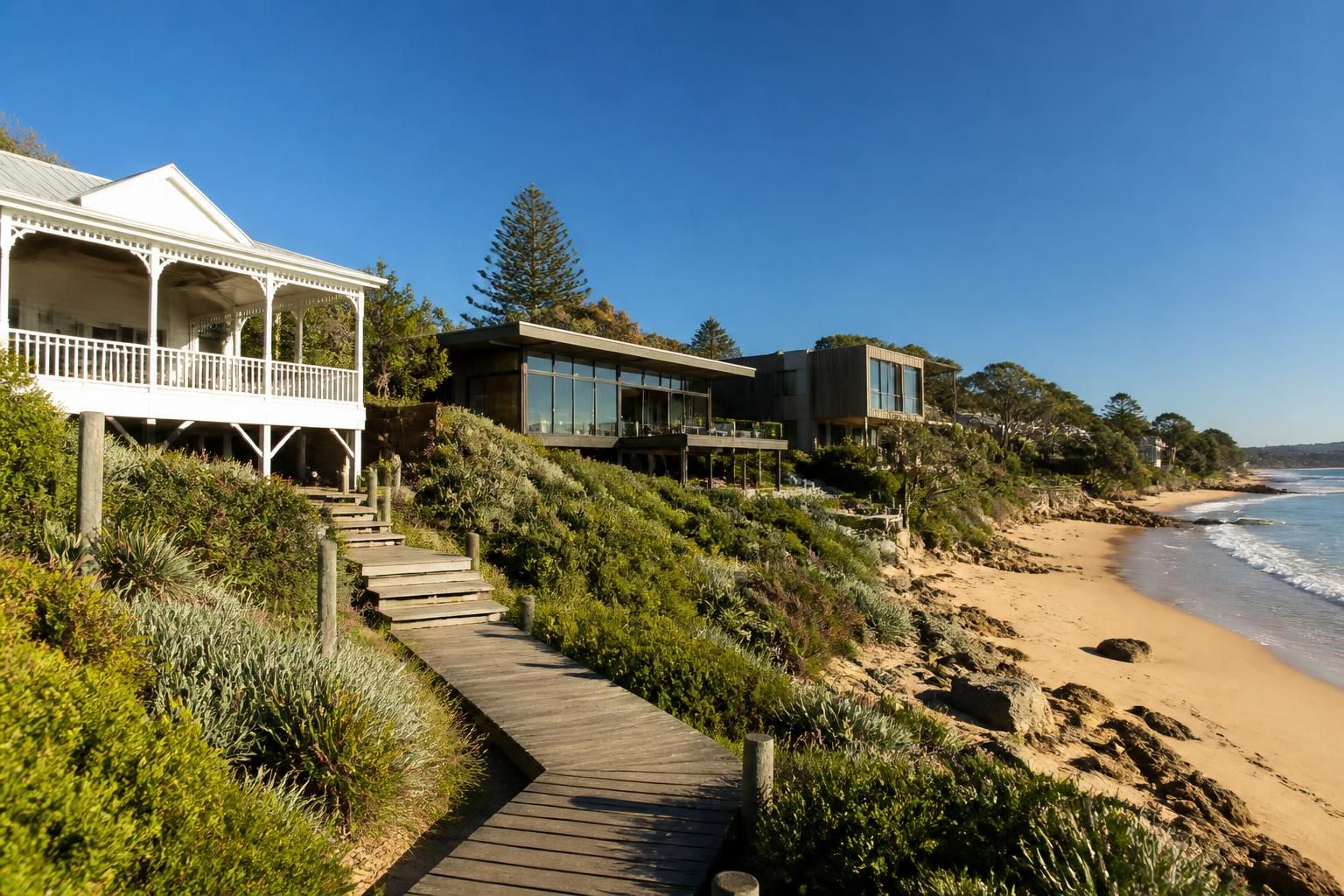
Australia’s coastline is dotted with an array of beach houses that narrate a story of both cultural evolution and architectural innovation. From the humble fibro shacks to contemporary design marvels, the Beach House Architecture in Australia embodies a unique blend of lifestyle, environment, and heritage. This architectural journey reflects not only the shifting trends in design but also the ways Australians connect with their coastal environments and envision outdoor living. Examining these coastal homes unveils a fascinating history tied to community identity, sustainability, and an enduring quest for a relaxed yet sophisticated way of life.
Key Points to Understand About Australian Beach House Architecture in 2026:
- Beach houses started as modest fibro ‘shacks’ symbolizing simplicity and connection to nature.
- Architects like Gabriel Poole highlighted the challenges of coastal gentrification and loss of unique coastal vernacular.
- There is a renewed push in contemporary architecture toward sustainability and respect for traditional design elements.
- Timber construction and modernism have influenced the design evolution, balancing utility and style.
- Heritage preservation remains critical as many early beach shacks face demolition or alteration.
- Outdoor living is integral, enhancing the connection between the interiors and the stunning coastal landscapes.
- Notable historians and architects are shedding light on the complex cultural layers woven into these coastal homes.
- The delicate balance between modernization and maintaining a unique coastal identity is a driving force behind current architectural practices.
The Origins and Early Development of Beach House Architecture in Australia
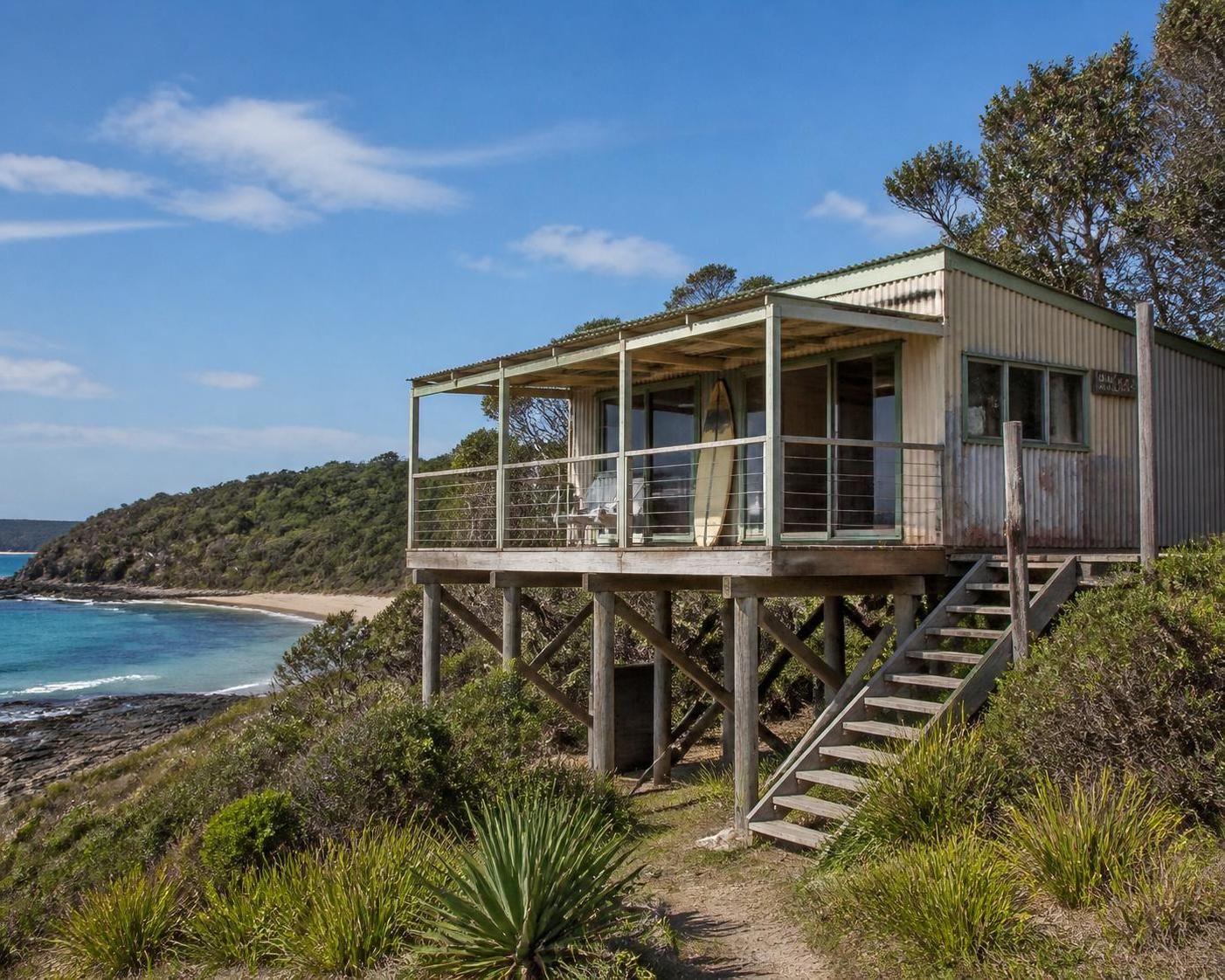
When considering the history of beach house architecture in Australia, one must first appreciate the modest beginnings. The earliest beach houses predominantly took the form of simple, functional beach shacks constructed primarily from fibro cement sheets, affectionately known as fibro shacks. These structures emerged in the early-to-mid 20th century and were often erected as simple weekend retreats with minimal amenities. The fibro shack has become symbolic of Australia’s laid-back coastal lifestyle.
These dwellings were characterized by their small scale and their economical construction — a necessity in the early days when coastal areas were less developed and infrastructure was minimal. Local architects like Lindsay and Kerry Clare have emphasized how these fibro shacks contributed significantly to the unique Queensland coastal vernacular. This style was marked by a direct relationship with the natural environment, often featuring timber frames raised on posts, simple gable or skillion roofs, and an austere layout often limited to a few separate pavilions dedicated to living, sleeping, and bathing.
The charm of these shacks lies not just in their low-cost and pragmatic design but also in their ability to foster a particular lifestyle centered around outdoor living and connection to nature. Many of these shacks have become cherished heritage assets in coastal communities, treasured for their aesthetic simplicity and the memories imbued in their weathered facades. Despite risks such as fibrous asbestos remnants, fibro shacks remain iconic fixtures that tell stories of generations of Australians seeking respite on the coast.
This era also saw the importation of design influences from movements like the English Arts and Crafts, adapted skillfully for the Australian context to respond to local climate conditions and materials. The fibro shack’s practicality made it a canvas to evolve an architectural style that is fundamentally Australian, driven by necessity, environment, and lifestyle aspirations.
Architectural Evolution: Influences of Modernism and Timber Construction
As Australian society progressed through the mid-20th century into the 21st century, the architecture of beach houses matured from simple fibro shacks to more pronounced expressions of modernism and timber construction. The infusion of modernist principles — simplicity in form, minimal ornamentation, open plan interiors, and an emphasis on connection with nature — dramatically altered the beach house landscape.
Timber became a highly favored material for coastal homes because of its natural aesthetic, thermal performance, and sustainability credentials. It provided a tangible link between the built environment and the surrounding landscape, a priority in beach house design where integration with nature is paramount. Architects played with timber framing, cladding, and detailing to produce homes that are both visually appealing and environmentally responsive.
Gabriel Poole, a celebrated figure in the Sunshine Coast architecture scene, contributed enormously to this evolution. His work highlighted the tension between development and preservation, lamenting that rapid coastal gentrification was eroding the very qualities that made these coastal areas desirable. Poole’s critique offers insight into ongoing challenges: as wealthy populations build expansive new homes, the distinctive character of coastal villages — shaped largely by earlier simple shacks — risks dilution.
The transition to modernism also introduced structural experimentation, such as skillion roofs oriented to prevailing winds, wide verandahs for shade, and an emphasis on natural ventilation and lighting. These adaptations not only made beach houses more comfortable year-round but also more sustainable by leveraging passive design principles.
In the current decade, architects push further in sustainability by deploying technologies like solar power while maintaining respect for the humble beginnings of beach house forms. Contemporary designs sometimes pay homage to the fibro shack by incorporating fibro-like panels, clean lines, and smaller scales that avoid the McMansion effect criticized by Poole and others, who note the tendency for coastal homes to mimic generic international styles with limited regard for uniqueness or environmental responsibility.
The Role of Timber in Sustainable Coastal Design
Timber’s renewable nature, thermal properties, and versatility stand it apart as the ideal material for sustainable coastal homes. Advances in engineered timber products enable stronger and longer-lasting structures that are still light in appearance.
Examples abound where timber’s tactile quality enhances outdoor living areas — decks, pergolas, and balconies — creating seamless transitions between interiors and the natural environment. This connection has become a defining characteristic of Australian beach house architecture in 2026.
Heritage and Preservation: The Cultural Significance of Beach Shacks
The cultural heritage embedded within Australia’s beach houses cannot be overstated. Beyond their architectural details, beach shacks represent touchstones of community, memories, and the evolution of Australian coastal lifestyles. As coastal development accelerates, many of these early dwellings face threats of demolition or over-modernization, prompting heritage advocacy from both historians and community groups.
Anna Clark, Professor in Public History at the University of Technology Sydney, extensively researches the complex histories of beach shacks, highlighting their role as emblems of not only leisure but also colonization, marginalization, and community resilience. In her forthcoming work commissioned by Penguin Random House Australia, Clark describes beach shacks as “distinctive identity markers” stretching from the Torres Strait down to Tasmania. This expansive cultural footprint underscores the significance of these structures beyond mere architecture.
The preservation challenge lies in balancing heritage values with demands for modern comfort and sustainability. Many communities now seek to retain the visual and spatial character of classic beach shacks while integrating contemporary technologies and materials to ensure longevity and environmental stewardship. Adaptive reuse and sensitive renovations offer pathways to protect these coastal gems.
Heritage beach shacks also encapsulate an economy of construction — with limited materials and restrained detailing — that contrasts sharply with current trends favoring large-scale coastal developments. This restraint contributed to a visual cohesion within towns and an architectural harmony with the coastal landscape, aspects that modern coastal design aims to recapture to preserve community identity.
The Impact of Coastal Gentrification and Contemporary Challenges
Coastal gentrification has been a hot topic in discussions about the future of Australian beach house architecture. As Gabriel Poole observed, there is an ironic paradox where the influx of new residents aiming to enjoy the coastal lifestyle results in developments that may erode the very natural and cultural values they sought. The rise of “McMansions” — oversized, often minimally contextual homes — threatens the coastal vernacular’s uniqueness.
Many architects and planners advocate for a return to the principles embedded in early fibro shack designs: simplicity, modest scale, a strong connection to the environment, and sustainable approaches to construction. This struggle reflects a broader tension faced globally where high-value coastal land invites speculative development, often overshadowing community and heritage perspectives.
The tension has also sparked innovative responses. Some builders and architects purposely design “neo-fibro” homes, blending the aesthetic and practical elements of traditional beach shacks with modern technology and luxury. These homes endeavor to preserve the identity and social narrative of coastal towns while meeting the expectations of contemporary coastal living.
Strategies to Combat Gentrification Risks
- Planning regulations enforcing scale and style guidelines that protect coastal heritage.
- Community engagement initiatives empowering locals to influence development responsibly.
- Adaptive reuse prioritizing renovations of existing structures rather than demolishing.
- Sustainability mandates encouraging energy efficiency and materials reuse to reduce ecological footprints.
Outdoor Living and Its Influence on Beach House Design
Outdoor living is intrinsic to Australian beach house architecture. From early fibro shacks with their modest verandahs to expansive modern decks, this focus enhances the connection between occupants and the coastal environment. The warm Australian climate fuels a lifestyle that blurs the boundaries between inside and outside spaces.
Designs often feature elements such as open-air pavilions, large sliding doors, and shaded verandahs that encourage socializing and leisure activities in natural light and fresh air. The emphasis on seamless indoor-outdoor flow has also influenced the architectural materials chosen, with timber and fibre cement notable for their resilience to coastal weather.
By 2026, outdoor living concepts have further evolved to include sustainable landscaping and native plantings that reinforce ecological harmony. This approach helps mitigate coastal erosion and supports biodiversity, adding important environmental stewardship to the architectural ethos.
Modern Innovations in Coastal Design and Sustainability
Contemporary beach house architecture is marked by its commitment to sustainable practices and innovations designed to protect fragile coastal ecosystems. Architects integrate passive solar design, natural ventilation, and rainwater harvesting into homes to reduce energy demands and environmental impact.
In addition, the alignment of homes to natural site conditions such as slope, prevailing winds, and tree cover optimizes passive heating and cooling, minimizing reliance on technology. These design choices echo earlier Australian coastal housing principles that valued economy and restraint. Today, technology and tradition merge, leading to hybrid architectural languages that acknowledge historic influences while promoting ecological responsibility.
Examples like the Mornington Peninsula renovation by Agius Scorpo Architects demonstrate how timber beach houses can be crafted with reverence for their humble predecessor’s form and material while boldly incorporating modern craftsmanship and sustainable principles.
Key sustainability features in contemporary beach houses:
| Sustainability Feature | Description | Benefit |
|---|---|---|
| Passive Solar Design | Building orientation and shading designed to maximize sunlight in winter and minimize heat gain in summer | Reduced heating and cooling energy needs |
| Rainwater Harvesting | Systems to collect and store rainwater for household use | Conservation of municipal water resources |
| Natural Ventilation | Strategic placement of windows and vents for airflow | Improved air quality and reduced reliance on air conditioning |
| Use of Timber | Sustainable timber products and finishes | Low embodied energy and aesthetic integration with environment |
Embracing Heritage While Forward-Thinking: The Future of Beach House Architecture
The challenge for Australian beach house architecture going forward is to reconcile heritage preservation with the demands of modern coastal living. Architects, planners, and communities increasingly recognize that the unique identity of Australian coastal settlements depends on celebrating the past while embracing innovation.
Recent discourse in architectural journals and media highlights the importance of retaining the essence of the fibro shack while addressing climate change, sustainability, and rising coastal populations. This has led to the emergence of design philosophies that balance modest scale with advanced materials, heritage colors, and an emphasis on simplicity and authenticity.
Platforms such as The Design Files showcase coastal homes that successfully mix traditional elements with state-of-the-art sustainability practices, encouraging broader awareness and appreciation for this evolving architectural niche.
Indeed, maintaining community identity while enabling innovative outdoor living and environmentally responsible construction is at the heart of this new architectural wave. This holistic approach ensures that Australian beach houses continue to be symbols of aspiration, cultural memory, and ecological mindfulness.
Beach House Architecture as a Symbol of Australian Coastal Lifestyle and Identity
Ultimately, the architecture of beach houses in Australia functions as a powerful symbol of a lifestyle deeply connected to nature, leisure, and community. These coastal homes evoke nostalgia but also mark an ongoing evolution of how Australians inhabit and cherish their shores.
The beach shack, once a simple refuge, has become emblematic of broader social values — embracing outdoor living, valuing heritage, prioritizing sustainability, and celebrating a relaxed yet refined way of life. As historian Anna Clark’s work elucidates, beach shacks also carry complex cultural narratives intertwined with Australia’s colonial and post-colonial history, reflecting shifts in social attitudes and regional development.
The Australian beach house stands as a canvas on which stories of generations are painted, from the pioneering fibro constructions to the modern timber creations embracing new technologies. This enduring architecture invites us to appreciate not just the physical structures, but how they shape, and are shaped by, the human experience on the coast.
- They blend climate-responsive architecture with an emphasis on indoor-outdoor flow.
- They preserve a distinct community identity across evolving generations.
- They foster sustainable building practices aligned with contemporary ecological concerns.
- They honor the cultural and historical significance embedded in the Australian coastline.
What materials were commonly used in early Australian beach shacks?
Early Australian beach shacks were predominantly constructed with fibro cement sheets (fibro) and timber framing, chosen for their affordability, ease of construction, and suitability for coastal environments.
How has coastal gentrification affected Australian beach house architecture?
Coastal gentrification has led to the demolition of many modest fibro shacks in favor of large, often generic modern homes, threatening the unique character and sustainability principles of traditional beach house architecture.
What role does timber play in contemporary beach house design?
Timber provides a natural, sustainable material that enhances the connection between indoor and outdoor spaces, improves thermal performance, and supports environmentally responsible construction in coastal architecture.
How are heritage values incorporated into modern beach house renovations?
Heritage values are preserved through sensitive adaptive reuse, maintaining original forms and materials where possible, while integrating modern sustainability technologies and design improvements for comfort and longevity.
Why is outdoor living significant in Australian beach house design?
Outdoor living is central to Australian coastal lifestyle, encouraging a seamless connection between interiors and surrounding nature, maximizing natural light, ventilation, and fostering social interaction in the warm climate.